
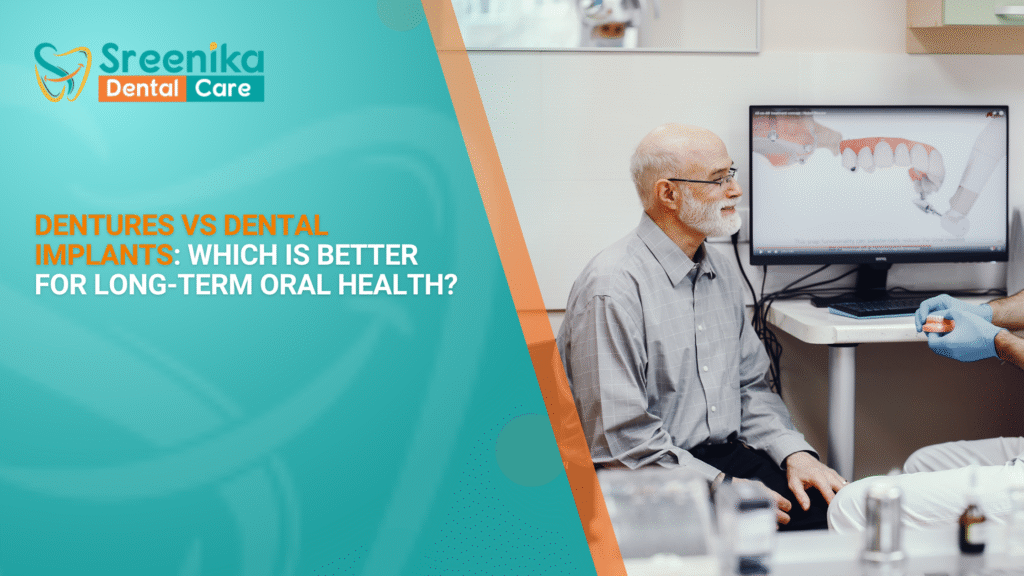
Are you feeling stressed with loose teeth? Is it affecting your eating, speaking and smile? Do not worry. Modern technology can restore missing teeth which makes you safer and comfortable. It is important to note that dental implants and dentures are the most common procedures to be considered. These two treatments can bring back your original smile. When you think about dental health for a longer time, one option stays at the top.
Finding the differences between these two treatments will help you make a good decision. So, we at Sreenika, the best dental clinic in Attapur outlined the information below to help you learn how these options work, their benefits and which choice will protect your teeth for years.
Dental Implants and Dentures – What You Should Know?
Different dental replacement solutions such as implants and dentures may be used for the same purpose. But, the way they work is different. Tooth implants will act like artificial tooth roots inserted in the jawbone. They stay fixed, stable, and strong for the support for long. Dentures are removable plates that are on the top of your gums. They give a fast solution and are used when someone needs temporary dentures or a quick replacement.
If you know how each option affects chewing strength, comfort, bone health, and lifestyle will help you choose what fits your needs.
How Dental Implants Will Work?
Firstly, a small titanium post is placed into the jawbone. Then, the bone naturally bonds with this post. This process is called osseointegration that is making the implant strong and stable. Just like a natural tooth root. After healing, a customized crown is attached on the top.
Because of this natural integration, implants allow you to:
- Chew easily
- Follow simple oral hygiene
- Preserve your jawbone
- Smile naturally without fear
Since implants are mixed with the bone, they prevent bone shrinkage. This means your face shape will not be damaged.Your bite remains stable and your oral health will stay strong.
How Dentures Work?
Dentures are removable prosthetic plates that are set on the gums. They are used for people who are not able to afford for implant surgery. Many patients begin with temporary dentures immediately after extractions until they decide on the option for a long time.
Dentures do not restore the jawbone. This is why the bone will slowly start shrinking. This shrinkage may affect the fit of dentures over time that cause:
- Shifting dentures
- Chewing difficulties
- Gum irritation
- Frequent adjustments
Dentures will provide a quick solution. But, they may not offer long-term support.
Long-Term Results – Which Works Good?
When it comes to stability, implants have the advantage. Because they combine with the jawbone, implants will keep strong even when you eat harder foods. Dentures rest on the gums and may slip as the bone density reduces.
For example:
- Implants allow strong chewing
- Implants don’t click or move
- Dentures may require adhesive
- Implants provide stable, long-lasting support
Comfort and Daily Lifestyle Impact
We will consider comfort as the priority, right? Dentures sometimes cause sore spots, rubbing, or discomfort. Comparatively, implants will feel natural because they are part of your mouth.
To illustrate:
- Dentures must be removed at night
- Implants stay fixed permanently
- Dentures may irritate gums
- Implants support natural chewing
Thus, implants fit easily into your routine without constant cleaning or adjusting.
Bone Health: The Hidden Factor Most People Ignore
Missing teeth do more harm than just creating gaps. The jawbone depends on continuous stimulation from tooth roots. Without that stimulation, the bone begins to shrink.
Implants:
- Prevent bone loss
- Maintain facial shape
- Protect long-term oral health
Dentures:
- Do not connect with bone
- Lead to gum shrinkage
- Can make the face look sunken over time
Hence, implants support better bone health.
Durability and Maintenance
It is important to know that dentures need maintenance regularly. They must be removed every night, cleaned separately, soaked in cleaning solutions, and adjusted often as the jawbone changes shape.
In contrast, implants are extremely durable.
In fact:
- Dentures last about 5–7 years
- Implants last 20–30 years or more
- Dentures require more long-term cost
Therefore, implants become a better lifetime investment.
Eating and Speaking Comfort
Dentures can sometimes affect speech. Clicking sounds or slipping can be embarrassing during conversations.
Implants, however:
- Stay fixed
- Allow clear speech
- Help you chew harder foods
- Don’t require a special diet
Thus, implants provide natural eating and speaking comfort.
Who Must Choose Dental Implants?
They are perfect for someone who wants:
- A permanent solution
- A natural appearance
- Strong chewing ability
- Long-term jawbone protection
Even if your jawbone is weak, procedures like bone grafting can help.
Who Should Go For Dentures?
Dentures work well for:
- People missing multiple teeth
- Patients needing an affordable option
- Those who want immediate replacement
- Patients who do not want to for surgery
Cost Difference – Short-Term Cost vs Long-Term Value
Dentures might be low cost initially. But regular relining and replacements will add to the overall cost. Implants cost more at first, but they last longer with minimal maintenance.This is the reason implants will give better long-term value.
Aesthetic Appearance: What Looks More Natural?
Dental implants blend beautifully with natural teeth. They mimic shape, shade, shine, and function.
Implants offer:
- Better symmetry
- A natural-looking smile
- A more youthful appearance
This is why many people choose implants when appearance matters.
Healing Time – Faster vs Better
Dentures can be putted fastly, which is why they are used right after the damage. Implants take longer due to healing time, but the long-term benefits depend on the wait.
Oral Hygiene: Which Is Easier?
Implants require only regular brushing and flossing. Dentures, on the other hand, need more effort.
Dentures require:
- Removal
- Cleaning
- Soaking
- Special solutions
Implants make oral hygiene simple.
Delaying Dental Replacement: The Hidden Risks
Delaying treatment may cause:
- Teeth shifting
- Gum infections
- Jawbone loss
- Bite problems
- Chewing difficulty
Replacing missing teeth on time protects future oral health.
Choosing the Right Option: What Should You Consider?
Think about:
- Your long-term goals
- Your bone strength
- Your lifestyle
- Your comfort needs
- Your budget
In other words, choose the option that supports your present and future wellness.
Why Does the Right Dental Replacement Matters?
Your decision affects daily comfort, oral strength, bone health, and confidence. Therefore, choosing between implants and dentures is not just a short-term choice – it’s a long-term investment in your well-being.
Why Sreenika Dental Care Is the Best Choice?
As mentioned previously, both dentures and implants have their advantages. Dentures are used for short-term or budget-friendly needs. However, when you want long-term stability, the ability to chew strong, bone protection, and natural comfort, dental implants remain the best choice.
If you want expert guidance and advanced treatment, Sreenika, the best dental care hospital in Attapur and Kokapet can help you. The care by Dr. Harish Reddy, you receive a personalized treatment plan based on the condition of your jawbone, lifestyle, and expectations.
To sum up, protecting your oral health for years becomes easier when you choose the right professionals. And Sreenika, the top dental care clinic in Attapur is the right place to start your journey with confidence.
FAQs
Are dental implants painful?
Most patients will feel only mild discomfort during healing. The proper anesthesia and the method feels easier than a tooth extraction.
How long do dental implants last?
Proper oral care implants can last 20–30 years or even a lifetime, making them a long-term solution.
Do dentures look natural?
Modern dentures look natural, but implants will combine more seamlessly and stay stable during chewing and talking.
Can I eat normally with dental implants?
Yes. Once healed, implants let you chew all foods comfortably that include hard and items.
Are implants suitable for older adults?
Yes. Age is not a block. As long as bone health is good, seniors can also enjoy the benefits of implants.