
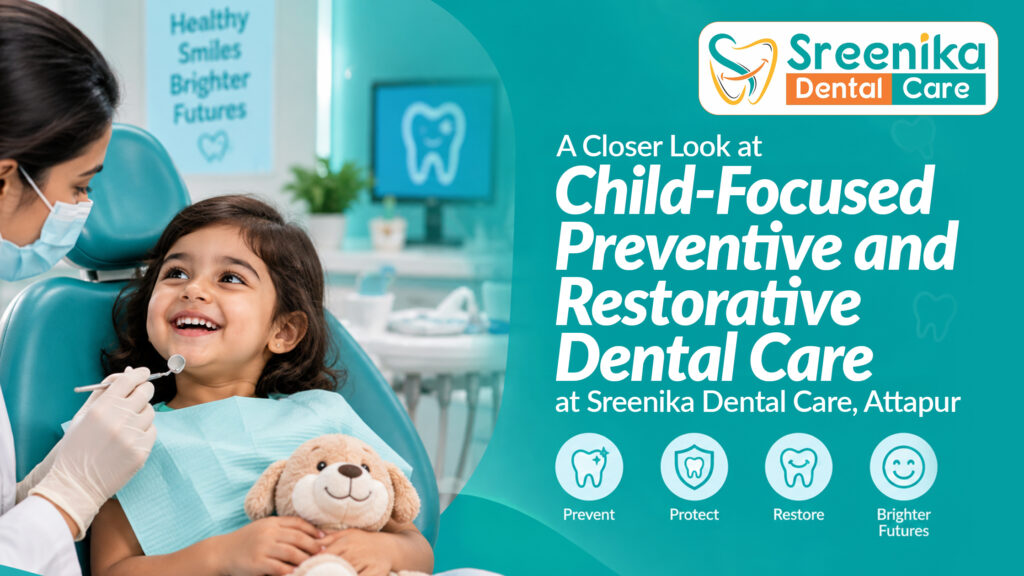
Regular dental care during childhood is about much more than checking for cavities. As children grow, their teeth, gums, jaw, and bite go through several developmental stages. Small dental concerns identified early can often be managed before they become more complicated problems.
Preventive dentistry focuses on keeping teeth healthy, while restorative care helps repair teeth that have already been affected by decay, damage, or other dental concerns. Combining both approaches gives children the support they need at different stages of their dental development.
For parents looking for reliable, child-friendly dental care in Attapur, Sreenika Dental Care provides preventive and restorative services with attention to each child’s age, comfort, and individual dental needs.
Why Preventive Dental Care Matters for Children
Baby teeth are temporary, but they play an important role in a child’s development. They help with chewing, speech, maintaining space for permanent teeth, and supporting normal oral development.
Regular preventive visits can help dentists identify issues before they cause significant discomfort. These visits may include:
- Checking for early tooth decay
- Monitoring tooth eruption
- Examining the gums and oral tissues
- Assessing brushing and oral hygiene habits
- Identifying bite or alignment concerns
- Advising parents about diet and dental care
Visiting a kids dental clinic in Attapur can also help children become familiar with the dental environment from an early age. This can make future appointments more comfortable and reduce fear associated with dental treatment.
Common Dental Problems Seen in Children
Children can develop dental problems for several reasons, including frequent consumption of sugary foods, inadequate brushing, improper oral hygiene habits, or natural differences in tooth development.
Some common concerns include:
Tooth Decay
Cavities are among the most common dental problems in children. Food particles and bacteria can remain on the teeth and produce acids that gradually damage the enamel.
Early detection allows the dentist to determine whether preventive care, a filling, or another treatment is appropriate.
Gum Problems
Although gum disease is more commonly associated with adults, children can also experience gum inflammation. Swollen or bleeding gums may indicate that better oral hygiene or professional evaluation is needed.
Dental Injuries
Falls, sports activities, and accidents can sometimes chip, crack, loosen, or even knock out a tooth. Prompt dental evaluation is important after an injury, even when there is no immediate pain.
Early Tooth Loss
Premature loss of a baby tooth can sometimes affect the space available for the permanent tooth underneath. Depending on the situation, the dentist may recommend monitoring or a suitable preventive treatment.
Restorative Dental Care: Repairing Damaged Teeth
Preventive care cannot always stop every dental problem. When a tooth has already developed decay or suffered damage, restorative dentistry helps preserve its structure and function.
Depending on the condition of the tooth, treatment may include:
- Tooth-coloured fillings
- Pediatric crowns
- Treatment for severely decayed baby teeth
- Management of damaged teeth following an injury
- Space maintainers when required
The objective is not simply to repair the visible problem. Preserving the tooth whenever possible can support normal chewing, speech, and dental development.
Why Baby Teeth Should Not Be Ignored
A common assumption is that cavities in baby teeth do not require much attention because those teeth will eventually fall out. However, untreated decay can cause pain, infection, difficulty eating, and other complications.
Baby teeth also help maintain the appropriate space for permanent teeth. Losing them earlier than expected may sometimes contribute to spacing or eruption problems.
For this reason, dental problems should be assessed rather than left untreated simply because the affected tooth is temporary.
Making Dental Visits Comfortable for Children
The quality of a dental experience can influence how children feel about dental care as they grow older. A child who experiences patience and positive communication during appointments may be more comfortable seeking dental care in the future.
At Sreenika Dental Care, appointments are approached with attention to the child’s comfort and understanding. Dentists may explain procedures in simple language, introduce instruments gradually, and give children time to become comfortable with the surroundings.
This child-focused approach can be particularly helpful for children who are visiting a dentist for the first time or who have previously experienced dental anxiety.
Preventive Treatments That May Help Protect Teeth
Depending on a child’s dental condition and risk of decay, the dentist may recommend specific preventive measures.
Fluoride Care
Fluoride can strengthen tooth enamel and make teeth more resistant to acid-related damage. The dentist can recommend appropriate fluoride care based on the child’s age and dental needs.
Dental Sealants
Sealants are protective coatings that can be applied to the grooves and pits of certain teeth. They can make these areas easier to keep clean and may help reduce the risk of cavities.
Professional Cleaning
Even with regular brushing, some areas can be difficult to clean effectively. Professional cleaning can help remove accumulated plaque and support better oral hygiene.
Building Better Brushing and Eating Habits
Dental treatment works best when good habits continue at home. Parents can help children develop consistent oral care routines by supervising brushing, choosing appropriate toothbrushes and toothpaste, and encouraging regular dental visits.
Diet also plays an important role. Frequent sugary snacks and drinks can increase the risk of tooth decay. Instead of focusing only on restricting individual foods, parents can encourage balanced meals and reduce how frequently teeth are exposed to sugary items.
Simple habits such as drinking water, brushing twice daily, and cleaning between teeth when appropriate can make a significant difference.
When Should Parents Schedule a Dental Visit?
A dental visit should not always wait until a child complains about tooth pain. Regular examinations allow the dentist to identify developing concerns even when there are no obvious symptoms.
Parents should consider scheduling an appointment if they notice:
- Toothache or sensitivity
- White, brown, or dark spots on teeth
- Bleeding or swollen gums
- Difficulty chewing
- Bad breath that persists
- A chipped or broken tooth
- Early or unexpected tooth loss
- Crowding or unusual tooth eruption
- Jaw discomfort or clicking
Regular check-ups also allow the dentist to monitor changes as baby teeth are replaced by permanent teeth.
How Sreenika Dental Care Supports Growing Smiles
Sreenika Dental Care, Attapur, provides dental care with a focus on prevention, early detection, and appropriate treatment. Dr. G. Lakshmi Madhuri, pediatric and preventive dentist, brings specialised experience in caring for children’s dental needs.
The approach focuses on:
- Age-appropriate dental care
- Preventive oral health guidance
- Early identification of dental concerns
- Gentle communication
- Restorative treatment when required
- Monitoring dental and oral development
Rather than treating every dental concern in the same way, Treatment can be planned based on the child’s age, dental condition, comfort level, and stage of development.
Choosing the Right Dental Clinic for Your Child
Parents should consider more than the availability of dental treatments when choosing a clinic for their children. The environment, communication style, experience with pediatric patients, and approach toward preventive care can all influence the overall experience.
When choosing a dental clinic in Attapur for your child, parents should look for thorough examinations, child-friendly communication, and treatment options suited to their child’s needs.
Preventive education is equally important. When children learn how to care for their teeth properly at an early age, they are more likely to carry those habits into adolescence and adulthood.
FAQs
1. How often should children visit the dentist?
Children should generally have regular dental check-ups as recommended by their dentist. The frequency may vary depending on their oral health, cavity risk, and developmental needs.
2. Are baby teeth important if they eventually fall out?
Yes. Baby teeth help with chewing and speech and maintain space for permanent teeth. Treating decay and other problems can help prevent unnecessary complications.
3. What should parents do if a child chips a tooth?
Arrange a dental examination as soon as possible. Even when the injury does not appear serious, a dentist can check for damage to the tooth and surrounding tissues.
4. Can dental sealants prevent cavities in children?
Dental sealants can help protect the grooves and pits of certain teeth where food and plaque can collect. They are one part of a broader preventive dental care routine.
5. How can parents make dental visits easier for children?
Use positive language about dental visits, avoid frightening descriptions, maintain regular check-ups, and allow the dentist to explain procedures in a child-friendly way. Consistent visits can also help children become familiar with the dental environment.
Supporting Healthy Dental Development from an Early Age
Preventive and restorative dentistry work together to protect children’s oral health through different stages of growth. Routine examinations can identify problems early, while timely restorative treatment can help preserve damaged teeth and prevent discomfort.
At Sreenika Dental Care in Attapur, children receive dental care designed around prevention, comfort, and long-term oral development. With appropriate guidance at home and regular professional care, parents can help establish habits that support healthier teeth and gums as their children grow.
📞 Call or WhatsApp: 91827 11994
🌐 Website: sreenikadentalcare.com
📍 Location: Attapur, Hyderabad