
Bleeding gums, persistent bad breath, and swollen gum tissue are often considered minor dental problems. However, these symptoms can sometimes indicate the early stages of gum disease. When gum inflammation is left untreated, it may gradually affect the tissues and bone supporting the teeth, increasing the risk of tooth mobility and eventual tooth loss.
One important sign of progressing gum disease is the formation of periodontal pockets. These spaces develop between the teeth and gums, allowing harmful bacteria and plaque to accumulate below the gumline. As the pockets become deeper, maintaining proper oral hygiene becomes more difficult.
For patients considering Gum Disease Treatment in Attapur, understanding how periodontal pockets develop and how they are managed can help prevent further damage. Early dental assessment and appropriate treatment play an important role in protecting natural teeth and maintaining long-term gum health.
What Is Gum Disease?
Gum disease, also known as periodontal disease, is an inflammatory condition affecting the gums and supporting structures around the teeth. It commonly develops when bacterial plaque accumulates along the gumline and is not adequately removed through daily oral hygiene.
There are two main forms of gum disease:
- Gingivitis:The early stage, characterised by redness, swelling, and bleeding gums. It is usually reversible with appropriate professional care and improved oral hygiene.
- Periodontitis:A more advanced condition in which inflammation affects the supporting tissues and bone around the teeth. Without treatment, it can lead to gum recession, deep periodontal pockets, and tooth loss.
Recognising gum disease during its early stages can help reduce the risk of permanent damage.
What Are Periodontal Pockets?
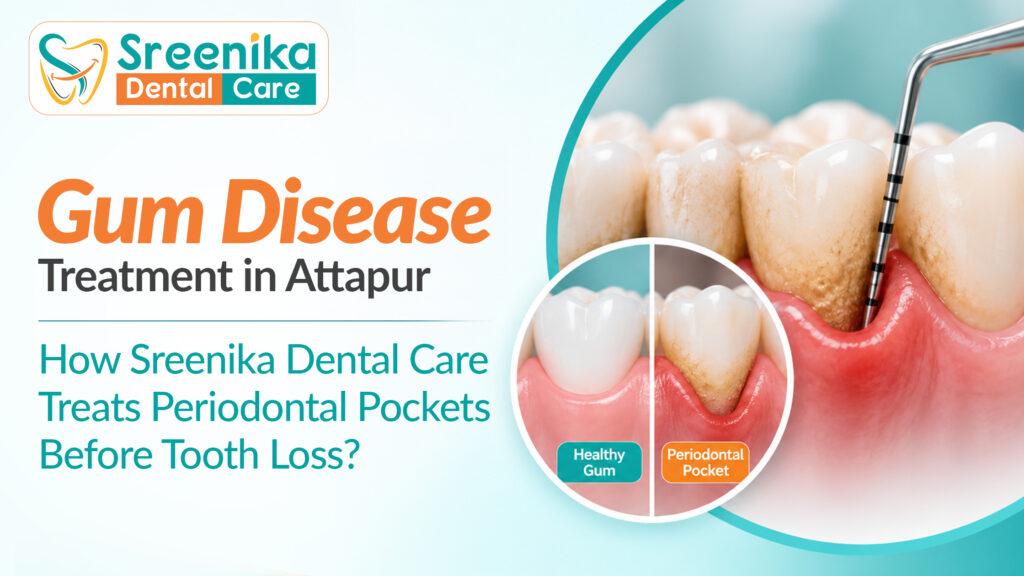
Healthy gums fit closely around the teeth, forming shallow spaces between the gum tissue and tooth surfaces. These spaces are generally between 1 and 3 millimetres deep.
When gum disease progresses, the supporting tissues may become damaged, creating deeper spaces known as periodontal pockets.
These pockets can collect:
- Bacterial plaque below the gumline
- Hardened tartar deposits
- Food debris
- Inflammatory substances
- Bacteria associated with periodontal infection
Because regular brushing cannot effectively clean deep periodontal pockets, professional dental treatment may be necessary.
What Are the Warning Signs of Periodontal Pockets?
Periodontal pockets do not always cause noticeable pain. Some patients may experience only mild symptoms even when the supporting tissues are affected.
Common warning signs include:
- Bleeding gums:Bleeding during brushing or flossing.
- Swollen gums:Redness, tenderness, or inflammation around the teeth.
- Persistent bad breath:Unpleasant mouth odour that continues despite brushing.
- Gum recession:Gums pulling away and making teeth appear longer.
- Tooth sensitivity:Discomfort around exposed root surfaces.
- Loose teeth:Changes in tooth stability as supporting tissues become damaged.
- Changes in bite:Teeth shifting or fitting together differently.
If these symptoms continue, a professional periodontal examination is recommended.
How Can Periodontal Pockets Lead to Tooth Loss?
The gums and jawbone work together to support natural teeth. When periodontal pockets become deeper, bacterial deposits may remain beneath the gumline and contribute to ongoing inflammation.
Over time, untreated periodontitis can damage the periodontal ligament and the bone surrounding the tooth roots.
As bone support decreases, teeth may gradually become loose or shift from their original positions. In advanced cases, the remaining support may be insufficient to maintain the affected teeth.
However, developing periodontal pockets does not automatically mean tooth loss is inevitable. Timely treatment can help control the disease and preserve many affected teeth.
How Are Periodontal Pockets Diagnosed?
A periodontal examination helps determine the severity of gum disease and identify areas requiring treatment.
1. Gum Examination
The dentist examines the gums for bleeding, redness, swelling, recession, and other signs of inflammation.
2. Periodontal Pocket Measurement
A small measuring instrument called a periodontal probe is gently placed between the tooth and gum to measure pocket depth.
Deeper measurements may indicate periodontal disease, particularly when accompanied by bleeding or attachment loss.
3. Dental X-Rays
X-rays may be recommended to evaluate the bone surrounding the teeth and identify changes associated with periodontal disease.
4. Assessment of Tooth Stability
The dentist checks whether any teeth have become loose or changed position.
These findings help determine the appropriate treatment approach.
How Does Gum Disease Treatment Help Manage Periodontal Pockets?
Treatment focuses on removing bacterial deposits, reducing inflammation, and controlling further damage to the supporting structures.
At Sreenika Dental Care, patients can undergo a dental assessment to understand the condition of their gums and discuss suitable periodontal treatment options.
Depending on the severity of the disease, the dentist may recommend the following approaches.
Step 1: Professional Dental Cleaning
For early gum inflammation without significant attachment loss, professional cleaning may be recommended.
This procedure removes plaque and tartar deposits that cannot be eliminated through brushing alone.
Step 2: Scaling and Root Planing
Scaling and root planing is a non-surgical deep-cleaning procedure commonly used to manage periodontitis.
It involves:
- Scaling:Removing bacterial plaque and tartar from tooth surfaces above and below the gumline.
- Root planing: Removing deposits and smoothing affected root surfaces where necessary to support gum healing and make bacterial plaque easier to control.
Local anaesthesia may be used to improve comfort during treatment.
Step 3: Managing Persistent Infection
In selected cases, the dentist may recommend antimicrobial treatment alongside mechanical cleaning.
Antibiotics are not necessary for every patient. Their use depends on the clinical findings and individual treatment requirements.
Step 4: Re-Evaluating Gum Health
After the initial treatment, a follow-up examination helps assess gum healing.
The dentist may measure pocket depths again, check for bleeding, and determine whether additional treatment is necessary.
When Is Periodontal Surgery Necessary?
Not every patient with gum disease requires surgery. Many cases can be managed through non-surgical treatment and regular maintenance.
However, periodontal surgery may be considered when deep pockets remain difficult to clean or when significant supporting tissue damage is present.
Depending on the condition, treatment options may include:
- Pocket reduction surgery:Improving access to deep areas for cleaning and reducing pocket depth.
- Regenerative procedures:Using selected materials or techniques to encourage regeneration of lost supporting tissues where appropriate.
- Gum grafting:Addressing certain cases of gum recession and exposed tooth roots.
A dentist or periodontist determines whether surgical treatment is appropriate after evaluating the severity of the disease.
What Happens After Gum Disease Treatment?
Recovery depends on the type of periodontal treatment performed.
Following deep cleaning, patients may experience temporary gum tenderness, mild bleeding, or tooth sensitivity.
The dentist may recommend:
- Brushing gently with a soft-bristled toothbrush.
- Following instructions for cleaning between teeth.
- Using prescribed medication or mouth rinses when necessary.
- Avoiding tobacco products.
- Attending scheduled follow-up appointments.
Gum inflammation may improve over the following weeks. However, previously lost supporting bone does not automatically regenerate after deep cleaning.
How Can You Prevent Periodontal Pockets from Returning?
Periodontitis is a long-term condition that requires ongoing care, even after successful initial treatment.
Important preventive measures include:
- Brush twice daily:Use fluoride toothpaste and clean carefully along the gumline.
- Clean between teeth:Use dental floss or interdental brushes as recommended.
- Schedule dental check-ups:Regular examinations help identify recurring inflammation.
- Attend periodontal maintenance:Some patients require professional maintenance every three to four months, depending on their risk.
- Avoid tobacco:Smoking and other tobacco use can increase periodontal disease risk.
- Manage diabetes:Maintaining good blood sugar control can support periodontal health in patients with diabetes.
Consistent home care and professional monitoring help maintain treatment results.
Can Teeth Be Saved After Periodontal Pocket Formation?
Many teeth affected by periodontal pockets can be retained when the disease is diagnosed and managed appropriately.
The outcome depends on several factors, including pocket depth, bone loss, tooth mobility, individual health conditions, and response to treatment.
Early intervention can help stabilise gum health and reduce the risk of further tooth-supporting tissue damage. However, severely affected teeth may not always be maintainable.
Frequently Asked Questions
Q1. Can periodontal pockets heal without treatment?
Mild gum inflammation may improve with better oral hygiene. However, deeper pockets associated with periodontitis generally require professional treatment to remove deposits beneath the gumline and control the disease.
Q2. Is scaling and root planing painful?
Scaling and root planing may cause some discomfort, but local anaesthesia can be used when necessary. Temporary sensitivity or gum tenderness may occur after treatment.
Q3. Can deep periodontal pockets become smaller after treatment?
Yes. Pocket depths may decrease as inflammation improves and gum tissues heal. However, the amount of improvement depends on the severity of the condition and the response to treatment.
Q4. How long does gum disease treatment take?
The treatment duration varies depending on the number of affected teeth, pocket depths, and whether additional procedures are required. Some patients need multiple appointments and ongoing periodontal maintenance.
Q5. Can gum disease return after successful treatment?
Yes. Periodontitis can recur if bacterial plaque accumulates or other risk factors remain uncontrolled. Regular dental visits and consistent oral hygiene are important for maintaining periodontal health.
Protect Your Gums Before Tooth Loss Occurs
Bleeding gums, persistent bad breath, and gum recession should not be ignored. These symptoms may indicate periodontal inflammation that requires professional evaluation.
Identifying periodontal pockets early allows the dentist to recommend suitable treatment before further damage occurs. Professional cleaning, scaling and root planing, and regular follow-up care can help manage gum disease and protect natural teeth.
If you notice signs of gum problems, schedule a consultation at Sreenika Dental Care in Attapur for proper evaluation and treatment.
Phone: +91 91827 11994