
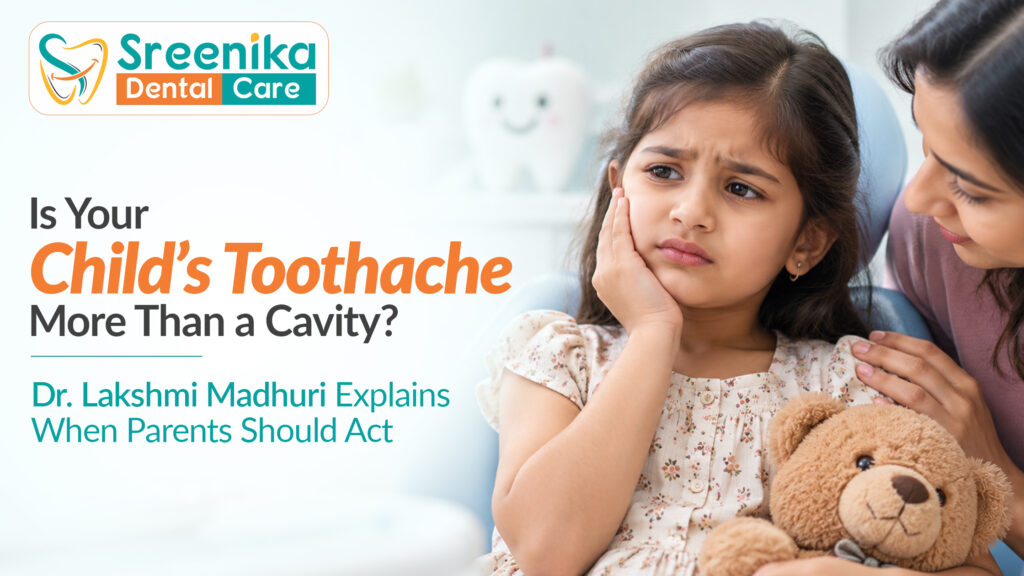
A toothache can be unsettling for both children and parents. Sometimes the discomfort may be caused by a cavity, but pain can also signal a deeper dental problem that needs prompt attention. Children may describe tooth pain differently depending on their age, and younger children may not always be able to explain exactly where or why it hurts.
A child may complain about pain while eating, avoid certain foods, wake up during the night, or become unusually irritable. These changes can sometimes be the first indication that something is wrong with a tooth or the surrounding gums.
Understanding the possible causes of toothache can help parents decide when to monitor the symptoms and when to arrange a dental examination. Early evaluation can help identify the source of discomfort before the condition becomes more complicated.
At Sreenika Dental Care, Dr. G. Lakshmi Madhuri provides child-focused dental care with an emphasis on comfort, prevention, and early diagnosis. With more than 14 years of experience in pediatric and preventive dentistry, she helps children receive appropriate care based on their individual dental needs.
What Can Cause Toothache in Children?
Tooth pain does not always mean that your child has a simple cavity. Several dental conditions can cause discomfort, ranging from minor sensitivity to infection.
Common causes include:
- Tooth decay
- Deep cavities
- Dental infections
- Gum inflammation
- Cracked or fractured teeth
- Food trapped between teeth
- Tooth eruption
- Dental injuries
- Prolonged oral habits
- Untreated problems affecting baby teeth
The location, duration, and severity of the pain can provide useful clues, but only a dental examination can determine the actual cause.
When Is a Toothache More Than a Cavity?
A small cavity may initially cause little or no discomfort. As decay progresses deeper into the tooth, however, the symptoms can become more noticeable.
Parents should pay closer attention if their child experiences:
- Persistent or worsening tooth pain
- Pain that continues after eating
- Night-time toothache
- Swelling around the tooth
- Sensitivity to hot or cold foods
- Pain while biting or chewing
- Fever along with dental pain
- Pus or a persistent unusual taste in the mouth
- Difficulty opening the mouth
These symptoms can indicate that the problem has progressed beyond early tooth decay and requires professional assessment.
Signs Parents Should Never Ignore
Children do not always tell parents when they are experiencing dental discomfort. Some may simply change their eating habits or behaviour.
Look for signs such as:
Changes While Eating
If your child suddenly avoids chewing on one side, refuses crunchy foods, or complains when eating, dental pain may be involved.
Trouble Sleeping
Toothache that becomes worse at night can interfere with sleep and may indicate a more advanced dental problem.
Facial or Gum Swelling
Swelling around a tooth or along the gums should not be ignored. It may be associated with inflammation or infection.
Persistent Bad Breath
Bad breath that continues despite regular brushing may sometimes be associated with an untreated dental or gum problem.
Increased Irritability
Young children may become restless, cry more frequently, or have difficulty concentrating when they are experiencing dental discomfort.
Parents should not wait for severe pain before arranging an examination.
Toothache in Baby Teeth: Why Early Treatment Matters
Baby teeth are temporary, but they still perform important functions during childhood. They help children chew, speak, and maintain space for permanent teeth.
When decay in a primary tooth is left untreated, the child may experience increasing pain or infection. In some cases, extensive decay can affect the surrounding tissues and make treatment more complicated.
Early treatment can help:
- Relieve discomfort
- Preserve the affected tooth when possible
- Maintain space for permanent teeth
- Support normal chewing
- Prevent dental infection from progressing
- Reduce the need for emergency treatment
This is why parents should not assume that a painful baby tooth can simply be left untreated because it will eventually fall out.
How a Pediatric Dentist Identifies the Cause of Pain
A child’s dental examination involves more than simply looking for visible cavities. The dentist considers the child’s symptoms, dental history, age, tooth development, and overall oral condition.
During an examination, the dentist may assess:
- The affected tooth
- Nearby teeth
- Gums and surrounding tissues
- Tooth eruption patterns
- Bite and alignment
- Previous dental treatments
- Signs of trauma or fractures
If necessary, dental X-rays may be recommended to examine areas that cannot be seen during a routine visual examination.
This helps the dentist determine whether the pain is related to early decay, deeper infection, eruption, trauma, or another dental condition.
When Your Child Needs Urgent Dental Attention
Some toothache symptoms require faster attention than others.
Parents should contact a dentist promptly if their child develops:
Severe Tooth Pain
Intense or persistent pain should be evaluated rather than managed repeatedly with home remedies.
Swelling
Swelling of the gums, cheek, or face can indicate an underlying dental infection.
Fever
A fever associated with tooth pain may require urgent professional assessment.
Dental Injury
A chipped, cracked, displaced, or knocked-out tooth after an accident should be evaluated as soon as possible.
Difficulty Eating or Opening the Mouth
Significant difficulty chewing or opening the mouth can be a sign that the dental problem needs prompt attention.
If swelling is significant or your child appears seriously unwell, parents should seek urgent medical or dental care.
How Dr. Lakshmi Madhuri Approaches Children With Tooth Pain
A dental appointment can feel intimidating when a child is already experiencing pain. A calm and age-appropriate approach can help the child feel more comfortable during examination and treatment.
At Sreenika Dental Care, Dr. G. Lakshmi Madhuri focuses on explaining procedures in language children can understand.
Her approach may include:
- Listening carefully to the child’s complaint
- Explaining what will happen before treatment
- Using age-appropriate communication
- Introducing instruments gradually
- Encouraging children throughout the appointment
- Keeping the treatment environment reassuring
The goal is not only to address the immediate dental problem but also to help children develop a positive relationship with dental care.
Treatments That May Be Recommended for a Child’s Toothache
Treatment depends on what is causing the pain and how extensively the tooth has been affected.
Dental Fillings
Early or moderate cavities may be treated with a filling after the decayed portion of the tooth is removed.
Pulp Therapy
If decay has reached the pulp of a baby tooth, pulp therapy may be recommended to treat the affected tissue while preserving the tooth when possible.
Dental Crowns
A badly damaged baby tooth may require a crown to restore its structure and protect it from further damage.
Tooth Extraction
If a tooth is severely damaged or cannot be safely preserved, extraction may be considered.
Treatment After Dental Trauma
Children who injure a tooth may require monitoring, restoration, or other treatment depending on the type and severity of the injury.
The recommended treatment should always be based on an individual dental examination rather than the symptoms alone.
Why Parents Should Not Rely Only on Home Remedies
When a child develops a toothache, parents may try rinsing, cold compresses, or other temporary measures to make the child more comfortable. These measures may sometimes provide short-term relief, but they do not treat the underlying dental cause.
For example, pain caused by deep decay or infection will not disappear permanently simply because the symptoms temporarily improve.
Parents should arrange a dental evaluation when:
- Pain continues
- Symptoms repeatedly return
- The child wakes at night because of pain
- Swelling develops
- Eating becomes difficult
- A tooth has been injured
Early professional care can prevent a relatively manageable problem from progressing.
How Parents Can Reduce the Risk of Childhood Toothache
Prevention starts with everyday habits at home. Parents can help protect their child’s teeth by encouraging consistent oral hygiene from an early age.
Important habits include:
- Brush twice a day with fluoride toothpaste
- Help young children brush effectively
- Limit frequent sugary snacks and drinks
- Encourage water between meals
- Avoid putting a child to bed with sugary drinks
- Schedule routine dental examinations
- Address dental injuries promptly
- Follow the dentist’s recommendations for preventive treatments
Regular check-ups can also identify developing cavities before they begin causing noticeable pain.
Choosing a Children’s Dental Clinic in Attapur
When a child develops tooth pain, parents often want a dental clinic where the treatment is both clinically appropriate and comfortable for their child. A child-focused approach can be especially helpful for younger patients who may feel nervous about dental instruments or unfamiliar surroundings.
A children’s dental clinic in Attapur should ideally provide preventive care, diagnosis, restorative treatment, and age-appropriate communication under one roof.
At Sreenika Dental Care, pediatric dental care is tailored according to the child’s age, dental development, symptoms, and treatment requirements.
Why Early Dental Care Can Make Treatment Easier
Dental problems often become more complicated when treatment is delayed. A small area of decay may be easier to manage before it reaches deeper parts of the tooth.
Early attention can help children:
- Experience less discomfort
- Preserve healthy tooth structure
- Avoid unnecessary complications
- Become familiar with dental visits
- Develop better oral hygiene habits
- Maintain healthy primary and permanent teeth
For parents searching for the best dental clinic in Attapur, choosing a practice with dedicated pediatric experience can help ensure that their child’s dental and emotional needs are considered during treatment.
Frequently Asked Questions
1. Does every toothache in a child mean there is a cavity?
No. Toothache can result from cavities, gum inflammation, dental injuries, tooth eruption, food trapped between teeth, cracks, or infections. A dental examination is needed to identify the actual cause.
2. When should I take my child to the dentist for tooth pain?
Arrange a dental appointment if the pain persists, returns frequently, affects eating or sleeping, or is accompanied by swelling, fever, sensitivity, or other unusual symptoms.
3. Can a painful baby tooth be left untreated because it will eventually fall out?
No. Untreated decay in a baby tooth can cause pain and infection and may interfere with normal eating and oral development. The dentist can determine whether the tooth should be treated or monitored.
4. What should I do if my child develops swelling with a toothache?
Contact a dentist promptly for an evaluation. Swelling can be associated with infection and should not be ignored, particularly when accompanied by fever or significant discomfort.
5. How can I prevent toothache in my child?
Help your child brush twice daily with fluoride toothpaste, reduce frequent sugary foods and drinks, encourage healthy eating habits, and maintain regular dental check-ups.
Give Your Child the Right Care When Tooth Pain Starts
A child’s toothache should not automatically be dismissed as an ordinary cavity. Pain can have several causes, and symptoms such as swelling, night-time discomfort, fever, or difficulty eating may require prompt professional evaluation.
Dr. G. Lakshmi Madhuri at Sreenika Dental Care provides pediatric and preventive dental care with an emphasis on gentle communication, early diagnosis, and appropriate treatment. Addressing dental problems early can help protect primary teeth, support permanent tooth development, and make future dental visits more comfortable.
If your child has persistent tooth pain or any unusual dental symptoms, arranging a professional examination can help determine the cause and the appropriate next step.
Book a Dental Appointment
Sreenika Dental Care – Attapur
📞 Call/WhatsApp: +91 91827 11994
🌐 Website: https://sreenikadentalcare.com