
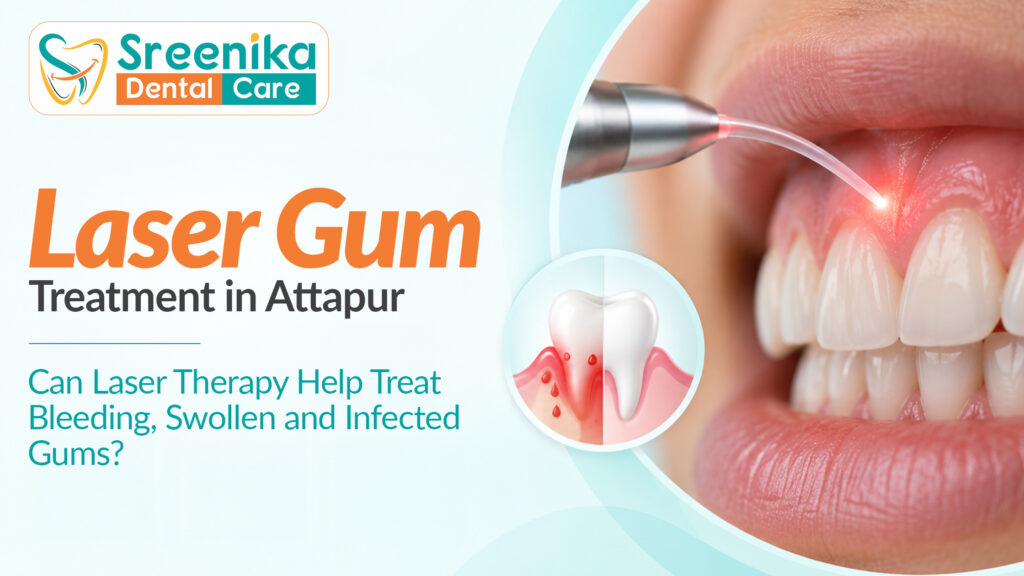
Bleeding gums may seem like a minor dental issue, especially when it happens only while brushing or flossing. But when bleeding is accompanied by swelling, redness, tenderness, bad breath, or gum recession, it can be a sign that something more serious is happening beneath the gum line.
Gum disease is one of the most common oral health problems and leaving it untreated can gradually affect the tissues and bone that support your teeth. Fortunately, treatment options have advanced significantly. Laser therapy is now used in selected cases to help manage gum infection while targeting diseased tissue with greater precision.
For people considering laser gum treatment in Attapur, understanding how the procedure works, who may benefit from it, what recovery involves, and what results to expect can make the decision much easier.
When Bleeding Gums Become More Than Just a Brushing Problem
Healthy gums generally do not bleed regularly during normal brushing or flossing. Occasional bleeding can occur if you have recently started flossing or are brushing too aggressively, but persistent bleeding deserves attention.
Some common signs associated with gum disease include:
- Bleeding while brushing or flossing
- Red or swollen gums
- Gum tenderness or discomfort
- Persistent bad breath
- Receding gums
- Increased sensitivity around the gum line
- Pus around the gums
- Loose or shifting teeth
- Changes in the way your teeth come together
These symptoms can occur at different stages of gum disease. Early gum inflammation may respond well to professional cleaning and improved oral hygiene, while more advanced periodontal disease may require additional treatment.
That is why a dental examination should come before deciding whether laser treatment is appropriate.
What Exactly Is Laser Gum Treatment?
Laser gum treatment uses concentrated laser energy to assist in treating diseased or infected gum tissue. Depending on the type and severity of periodontal disease, the dentist may use the laser to target infected tissue and bacteria around the teeth and within periodontal pockets.
The goal is to control infection while preserving as much healthy tissue as possible.
Unlike the image many people have of traditional gum surgery, laser-assisted procedures can be minimally invasive in appropriate cases. However, laser therapy is not automatically the best treatment for every patient. The dentist may recommend scaling and root planing, periodontal surgery, medication, or a combination of treatments depending on the condition of the gums and supporting bone.
How Does the Procedure Work?
Before treatment begins, the dentist examines your gums and measures periodontal pockets. Dental X-rays may also be recommended to check whether there is bone loss.
If laser therapy is suitable, the general process may involve:
1. Examination and Diagnosis
The dentist first identifies the extent of gum infection and checks for periodontal pockets, gum recession, inflammation, and bone loss.
2. Local Anaesthesia
Local anaesthesia may be used to keep the treatment area comfortable.
3. Removal of Diseased Tissue
The laser is carefully directed toward infected or unhealthy tissue around the affected teeth.
4. Cleaning of the Gum Pockets
Bacteria, infected tissue, and deposits beneath the gum line are addressed as part of the periodontal treatment.
5. Supporting Gum Healing
Depending on the treatment approach, laser therapy may be used alongside conventional periodontal procedures to create a healthier environment for the gums to heal.
The exact technique varies from one patient to another because periodontal disease does not look the same in every mouth.
Why Is Laser Therapy Being Used for Gum Disease?
One reason laser dentistry has gained attention is its ability to deliver focused energy to a specific treatment area. This can be useful when managing infected gum tissue while limiting unnecessary disturbance to surrounding areas.
Potential advantages of laser-assisted gum treatment may include:
- Targeted treatment:Laser energy can be directed precisely at affected areas.
- Reduced bleeding:The laser can help control bleeding during certain procedures.
- Less tissue trauma:Some procedures may involve less disruption to surrounding tissue than conventional surgical approaches.
- Patient comfort:Local anaesthesia is generally used, and many patients tolerate the procedure well.
- Recovery:Depending on the procedure performed, some patients may experience a relatively comfortable recovery.
- Bacterial reduction:Laser energy can help reduce bacteria in the treatment area.
- Support for periodontal care:Laser treatment can be used as part of a broader treatment plan for selected gum disease cases.
It is important to remember that these benefits depend on the patient’s condition, the laser system being used, and the type of periodontal treatment being performed.
Laser Treatment vs. Traditional Gum Treatment
Many patients ask whether laser treatment is better than conventional periodontal treatment.
| Factor | Conventional Periodontal Treatment | Laser-Assisted Treatment |
| Treatment approach | Mechanical cleaning and/or surgery | Laser may be used alongside periodontal treatment. |
| Treatment precision | Depends on the procedure and technique | Laser energy can be focused on specific treatment areas. |
| Bleeding | Depends on the procedure | May help control bleeding in certain procedures |
| Stitch | May be required for some surgeries | May not be required in some laser-assisted procedures |
| Recovery | Depends on the procedure | Depends on the procedure and extent of treatment |
The important point is that laser therapy should not be viewed as a replacement for every form of periodontal care. An experienced dentist will determine which approach is most appropriate.
Who May Benefit from Laser Gum Treatment?
Laser treatment may be considered for patients with certain forms of periodontal disease, particularly when infection and inflammation extend below the gum line.
You may be advised to consider periodontal treatment if you have:
- Persistent gum bleeding
- Moderate gum inflammation
- Deep periodontal pockets
- Recurring gum infections
- Gum swelling and tenderness
- Chronic bad breath linked to gum disease
- Early or moderate periodontal problems
Patients with severe bone loss, advanced periodontal destruction, or other complex dental conditions may require additional procedures.
If you are searching for a dental clinic near me , it is important to have a proper periodontal evaluation before deciding which treatment is right for you.
What Happens After Laser Gum Treatment?
Recovery depends on the extent of treatment and the overall condition of your gums.
You may experience mild tenderness, sensitivity, or swelling for a short period after treatment. Your dentist may recommend a soft diet temporarily and provide specific instructions for brushing, rinsing, and maintaining oral hygiene.
You should also avoid irritating the treated area and follow all prescribed instructions carefully.
Most importantly, laser treatment does not mean gum disease can never return. Gum health depends heavily on what happens after treatment.
Regular dental visits, proper brushing, flossing or interdental cleaning, and professional periodontal maintenance can help protect the results.
Can Laser Treatment Completely Cure Gum Disease?
This is one of the most important questions to ask.
Laser therapy can help manage periodontal infection in appropriately selected cases, but there is no single procedure that guarantees permanent protection from gum disease.
The bacteria responsible for gum disease can build up again when plaque and tartar are not controlled. Habits such as smoking can also negatively affect gum health and healing.
Long-term success usually depends on a combination of:
- Professional periodontal treatment
- Consistent daily oral hygiene
- Regular dental check-ups
- Professional cleaning when recommended
- Controlling plaque buildup
- Following post-treatment instructions
- Avoiding or stopping tobacco use
Think of laser therapy as one part of a complete gum-health plan rather than a one-time solution.
Is Laser Gum Treatment Expensive in Attapur?
The cost of laser gum treatment can vary considerably from patient to patient. There is no single price that applies to everyone because treatment may involve one area, several teeth, multiple quadrants, or the entire mouth.
Factors that can affect the final cost include:
- Severity of gum disease
- Number of teeth involved
- Depth of periodontal pockets
- Presence of bone loss
- Number of treatment sessions required
- Whether scaling or other periodontal procedures are needed
- Type of laser treatment recommended
For this reason, it is better to have an examination and receive a personalised estimate rather than relying on a fixed online price.
Choosing the Right Dental Clinic for Gum Treatment
When you are dealing with bleeding or infected gums, the technology used is only one part of the decision. The dentist’s experience, diagnosis, treatment planning, and follow-up care are equally important.
At Sreenika Dental Care, patients can receive dental evaluation and treatment for a range of oral health concerns, including periodontal problems.
A good dental clinic should:
- Perform a detailed gum examination
- Explain the severity of your condition
- Discuss suitable treatment options
- Explain the expected recovery process
- Provide clear aftercare instructions
- Monitor your gum health after treatment
- Recommend preventive care to reduce recurrence
If you are looking for the best dental clinic in Attapur, focus not only on the equipment available but also on the quality of diagnosis and personalised treatment planning.
What Results Can You Expect?
The purpose of periodontal treatment is to control infection and create healthier conditions for the gums and supporting structures around the teeth.
Depending on your starting condition, you may notice improvements such as:
- Less gum bleeding
- Reduced swelling
- Healthier-looking gum tissue
- Improved gum comfort
- Fresher breath
- Better control of periodontal infection
However, results vary. If there has already been significant bone or tissue damage, treatment may focus on controlling the disease and preventing further deterioration rather than completely reversing existing damage.
Regular follow-up appointments are therefore an important part of maintaining your results.
Don’t Ignore What Your Gums Are Telling You
Bleeding or swollen gums are easy to overlook, but persistent symptoms should not become part of your normal routine. Gum disease can progress quietly, sometimes without causing significant pain until the condition becomes more advanced.
If you are experiencing repeated bleeding, swelling, bad breath, gum recession, or loose teeth, a professional evaluation can help identify the cause and determine whether laser-assisted periodontal treatment is appropriate for you.
At Sreenika Dental Care in Attapur, the focus is on identifying the underlying problem and recommending treatment based on your individual gum health.
Acting early may help protect your natural teeth and prevent a manageable gum problem from becoming a more complicated dental issue.
Frequently Asked Questions
1. Is laser gum treatment painful?
Laser gum treatment is generally performed using local anaesthesia to keep the patient comfortable. You may experience mild tenderness or sensitivity afterward, but the level of discomfort varies depending on the procedure and severity of gum disease.
2. Can laser treatment stop bleeding gums?
Laser-assisted periodontal treatment may help control gum infection and inflammation, which can reduce bleeding when gum disease is the underlying cause. However, bleeding gums can have several causes, so a dental examination is important before choosing treatment.
3. How long does it take to recover after laser gum treatment?
Recovery varies depending on the extent of treatment and the patient’s periodontal condition. Some patients may experience only mild discomfort for a short period, while more extensive procedures can require additional healing time. Your dentist will provide specific recovery instructions.
4. Is laser gum treatment suitable for everyone?
No. Laser therapy is not automatically suitable for every patient with gum disease. The appropriate treatment depends on factors such as periodontal pocket depth, infection, bone loss, gum condition, and overall oral health.
5. Can gum disease come back after laser treatment?
Yes. Gum disease can recur if plaque and bacteria are not adequately controlled. Maintaining good brushing and interdental cleaning habits, attending regular dental appointments, and following your dentist’s maintenance plan are important for protecting your gums over the long term.
Take the First Step Toward Healthier Gums
Healthy gums do more than make your smile look better. They provide essential support for your teeth, so persistent bleeding, swelling, or infection deserves proper attention.
If your gums have been troubling you, don’t wait for the symptoms to become severe. Schedule a dental consultation at Sreenika Dental Care in Attapur to understand what is causing the problem and whether laser-assisted periodontal treatment could be suitable for your condition.
📞 Call : 091827 11994
🌐 Website: sreenikadentalcare.com
📍 Location: Attapur, Hyderabad