
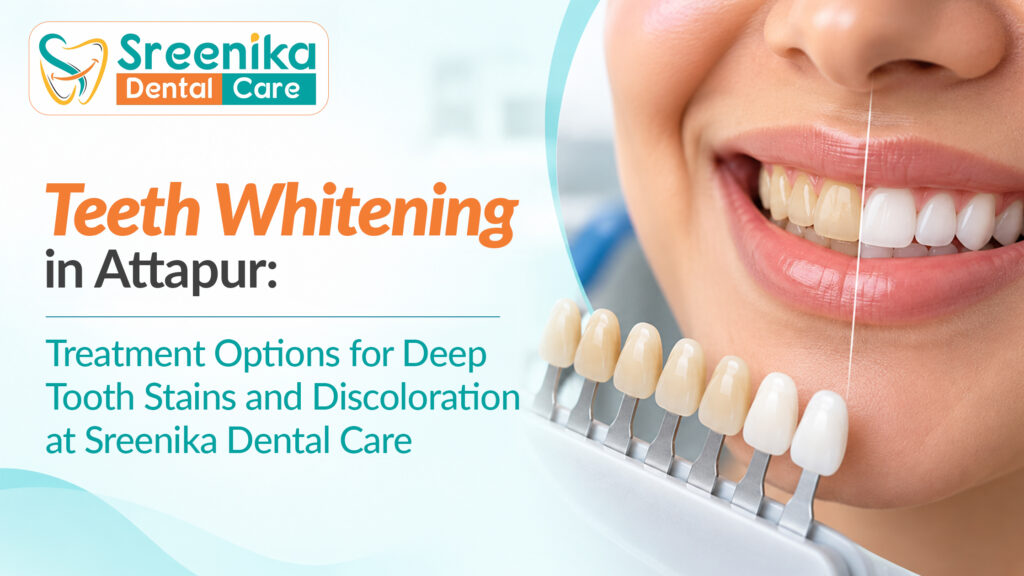
A tooth may remain healthy while gradually losing its natural colour. Coffee during work breaks, tea throughout the day, certain foods, tobacco use, and even ageing can leave teeth looking yellow or uneven. Sometimes, brushing twice daily and using whitening toothpaste make little difference because the stains have developed deeper within the tooth structure.
Understanding why teeth change colour is the first step towards choosing the right treatment. Surface stains may respond to professional cleaning, while deeper discolouration can require a different approach. The key is identifying the cause rather than trying multiple whitening products without knowing whether they are suitable for your teeth.
For people exploring teeth whitening in Attapur, Sreenika Dental Care offers a setting where dental professionals can assess tooth discolouration, explain suitable treatment options, and help patients make informed decisions about cosmetic dental care.
What Is Causing Your Teeth to Lose Their Natural Colour?
Tooth discolouration does not develop in the same way for everyone. The type of stain, its location, and the condition of the enamel can influence which treatment is likely to work.
Dentists generally classify tooth stains into two categories.
Extrinsic Stains: When the Surface Becomes Discoloured
Extrinsic stains develop on the outer surface of the teeth. They are commonly associated with:
- Frequent consumption of coffee, tea, and dark-coloured beverages
- Tobacco use
- Plaque and tartar accumulation
- Foods containing strong colour pigments
- Inadequate oral hygiene
Professional dental cleaning can help remove plaque, tartar, and many external stains. However, cleaning does not bleach the natural colour of the tooth.
Intrinsic Stains: When Discolouration Develops Within the Tooth
Intrinsic stains occur within the tooth structure and may be more difficult to address with ordinary whitening products.
Possible causes include ageing-related changes, certain medications taken during tooth development, dental trauma, and changes within the tooth following infection or other dental conditions.
The appropriate treatment depends on the underlying cause. A dental examination helps determine whether whitening is suitable or whether an alternative cosmetic or restorative procedure may provide a better result.
Why Some Tooth Stains Need More Than Regular Brushing
Brushing removes food debris and helps control plaque, but it cannot correct every type of discolouration. Whitening toothpaste may reduce some surface stains, yet it generally cannot produce the same effect as professionally supervised bleaching.
Certain changes in tooth colour also require closer attention. A single tooth that suddenly becomes grey or dark after an injury may indicate damage to the tooth’s internal tissues. Brown, white, or patchy areas can sometimes be associated with enamel defects or dental decay.
These concerns should not automatically be treated as cosmetic problems.
An examination helps distinguish ordinary staining from conditions that need dental treatment. Addressing the underlying issue first can prevent unnecessary whitening procedures and support better oral health.
Professional Whitening Options for Different Types of Discolouration
Once the cause of the staining has been identified, a dentist can recommend an appropriate treatment. The following options may be considered depending on the patient’s dental condition.
1. Professional Dental Cleaning
Cleaning is often a useful starting point for patients with plaque, tartar, and external stains.
During the procedure, accumulated deposits are removed using professional dental instruments. Polishing may also help eliminate certain surface stains, leaving the teeth cleaner and restoring their natural appearance.
Cleaning is not the same as bleaching. If the teeth are naturally yellow or have deeper discolouration, additional treatment may be necessary.
2. In-Office Teeth Whitening
Professional whitening uses bleaching agents to lighten the colour of natural teeth. Depending on the product and the patient’s needs, the dentist may apply a whitening gel containing hydrogen peroxide or carbamide peroxide.
The procedure generally involves examining the teeth, protecting the gums and other soft tissues, and applying the whitening product according to the manufacturer’s instructions.
Potential benefits include:
- Noticeable colour improvement for suitable stains
- Professional supervision throughout treatment
- Personalised recommendations based on tooth sensitivity
- Guidance on maintaining the results
The amount of whitening achieved varies according to the original tooth colour, the type of stain, and the response to treatment. Not every patient will achieve the same shade.
3. Dentist-Supervised At-Home Whitening
Some patients may be suitable candidates for whitening at home using dentist-recommended products. Depending on the treatment plan, this may involve custom-fitted trays and a prescribed whitening gel.
Results usually develop gradually over the recommended treatment period.
Patients should follow the dentist’s instructions carefully rather than increasing the gel quantity or treatment duration in an attempt to achieve faster results. Excessive use can increase tooth sensitivity and irritate the gums.
4. Veneers or Other Cosmetic Restorations
When bleaching is unlikely to correct the problem adequately, a dentist may discuss alternatives such as veneers or crowns.
Veneers are thin coverings placed over the front surfaces of suitable teeth. Crowns cover more of the tooth and may be recommended when significant structural restoration is also required.
These treatments are not necessary for every discoloured tooth. Because they may involve permanent changes to natural tooth structure, the dentist should explain their benefits, limitations, and alternatives before proceeding.
Understanding Deep Tooth Stains and Discoloration
Some stains remain visible despite regular oral hygiene and previous whitening attempts. Their appearance can provide clues about the underlying cause, although a dental examination is necessary for an accurate diagnosis.
For example, yellowing that affects several teeth may be related to ageing or natural variations in tooth colour. Brown staining can result from external pigments or other dental conditions. A single dark tooth may require an assessment for trauma, decay, or changes affecting the tooth’s pulp.
White patches can also occur because of enamel development changes or other conditions. Applying whitening products without understanding their cause may make differences in tooth colour more noticeable rather than less visible.
A dentist can evaluate the affected teeth, review relevant dental history, and determine whether cleaning, bleaching, or another treatment is appropriate.
Can Everyone Undergo Teeth Whitening?
Professional whitening is suitable for many adults, but it is not the right choice for everyone.
Before recommending treatment, a dentist may assess:
- Gum health:Active gum inflammation may need treatment first.
- Tooth decay:Cavities should be evaluated and treated before whitening.
- Existing sensitivity:Whitening can temporarily increase sensitivity in some patients.
- Dental restorations:Crowns, veneers, and tooth-coloured fillings do not whiten in the same way as natural teeth.
- Pregnancy or breastfeeding:Elective whitening is generally postponed because safety evidence is limited.
- Age and dental development:Whitening decisions for younger patients require particular care.
The dentist can explain the expected outcome and whether another approach would be more appropriate.
Managing Sensitivity During and After Whitening
Temporary tooth sensitivity is one of the more common side effects of bleaching. Some patients may also experience gum irritation, particularly when whitening products contact soft tissues.
To reduce the likelihood of discomfort, patients should use products as directed and avoid extending treatment beyond the recommended duration.
A dentist may suggest desensitising toothpaste, adjust the whitening schedule, or recommend a temporary break if symptoms develop. Patients experiencing significant or persistent pain should seek a dental assessment rather than continuing treatment.
It is also important to avoid unverified home remedies, including aggressive scrubbing with abrasive substances. These methods can damage enamel or irritate the gums without reliably improving tooth colour.
How to Keep Your Teeth Looking Cleaner for Longer
Whitening results can gradually fade, especially when the habits responsible for staining continue. A consistent oral care routine helps maintain dental health and may reduce the buildup of new surface stains.
Consider these practical habits:
- Brush twice daily with fluoride toothpaste.
- Clean between your teeth using floss or suitable interdental aids.
- Rinse your mouth with water after consuming staining beverages.
- Avoid tobacco products.
- Limit frequent exposure to sugary foods and acidic drinks.
- Attend dental checkups at intervals recommended for your oral health.
You do not necessarily need to eliminate coffee, tea, or other favourite beverages completely. Moderation and good oral hygiene can help manage staining while supporting healthy teeth and gums.
Frequently Asked Questions
1. How long does professional teeth whitening last?
Results vary depending on the treatment used, the original tooth colour, and daily habits. Whitening may last for several months or longer, but new stains can develop over time. Good oral hygiene and periodic dental reviews help maintain the results.
2. Can deep tooth stains be removed completely?
Some deep stains respond to professional bleaching, while others may not disappear entirely. The outcome depends on the cause and severity of the discolouration. Veneers or other restorative options may be considered when whitening alone is unlikely to provide the desired result.
3. Is professional teeth whitening safe for sensitive teeth?
People with sensitive teeth may still be suitable candidates, but they need an individual assessment. A dentist may recommend managing the sensitivity first, selecting an appropriate whitening product, or modifying the treatment schedule.
4. Will teeth whitening change the colour of crowns and fillings?
No. Whitening products lighten natural tooth structure but do not change the colour of existing crowns, veneers, or fillings. If the natural teeth become lighter, existing restorations may appear different in comparison. Discuss this possibility with your dentist before treatment.
5. What should I avoid after teeth whitening?
Follow the aftercare instructions provided by your dentist. Maintaining good oral hygiene, avoiding tobacco, and limiting frequent exposure to staining foods and beverages can help preserve the results. If sensitivity occurs, avoid anything that triggers discomfort and seek advice if symptoms persist.
Personalised Cosmetic Dental Care at Sreenika Dental Care
Choosing a teeth whitening treatment involves understanding the cause of discolouration, the condition of the enamel, existing restorations, and your expected results. Professional cleaning, bleaching, or selected restorative procedures may be recommended depending on your dental needs.
At Sreenika Dental Care, patients can receive professional dental evaluation and guidance on suitable treatment options. A personalised assessment helps identify the right approach while considering possible sensitivity, treatment duration, and long-term maintenance.
If you are considering teeth whitening in Attapur, consult a dental professional to understand your options and protect your natural teeth.
Book Your Appointment Call: 91827 11994